Native Trail
image
image
image


Native Plant Conservation

Preserving existing natural areas at the San Diego Botanic Garden is very important. The Garden is located in Encinitas, California
within a mile of the coast. There are approximately eleven acres of natural areas and restored natural areas in the Garden.
The local southern maritime chaparral and coastal sage scrub plant communities are some of the nation’s most endangered
vegetation types as they are small in size and restricted to coastal areas. Over the past century these Southern California coastal
areas have been in high demand for urban development.

Native Plant Conservation

Southern Maritime Chaparral & Coastal Sage Scrub

Coastal Sage Scrub is found from San Francisco south into Baja at low elevations, primarily on mesas within fifteen miles of the coast.
Much of the vegetation has semi-deciduous foliage in summer rather than the thick, evergreen foliage of chaparral.

Click image for closeup view For full plant views click on each image below.

Image
Botanical Name
Common Name
Garden/Location
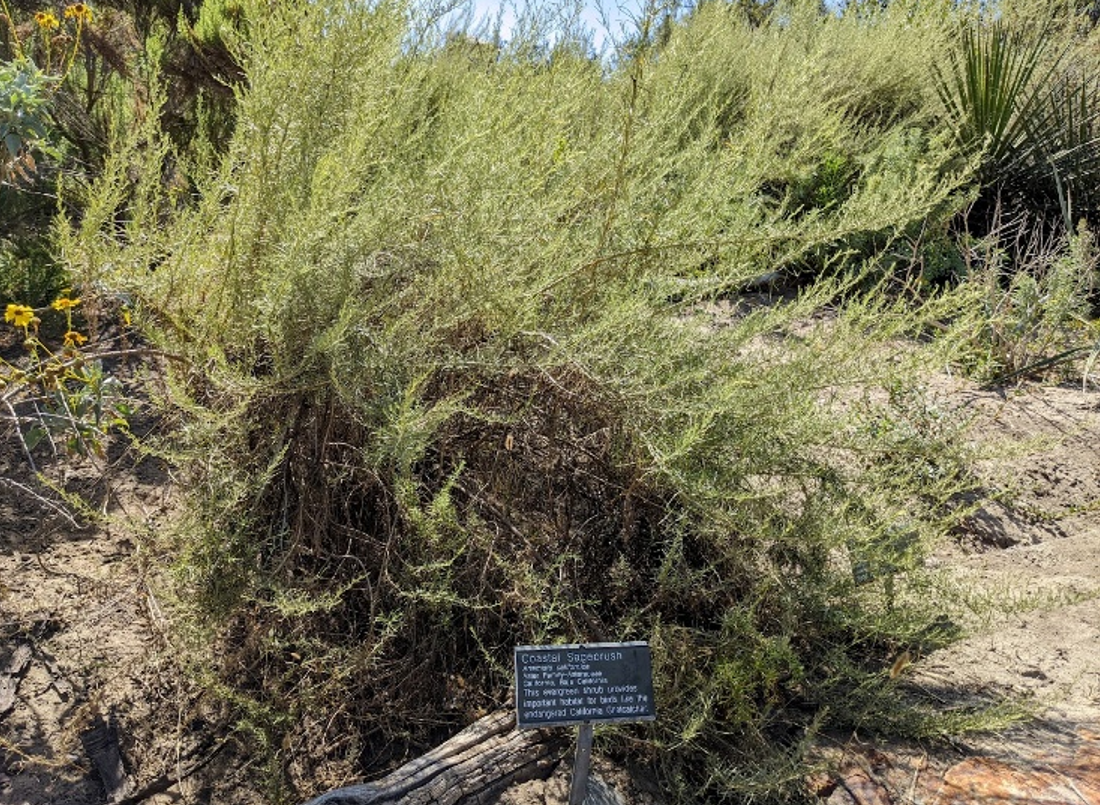
Artemisia californica
Coastal Sagebrush

Overlook Natural Area,
Native Plants, Native Peoples,
California Gardenscapes
Herb Garden

Salvia mellifera Black Sage Overlook Natural Area,
Native Plants, Native Peoples,
California Gardenscapes
Eriogonum fasiculatum California Buckwheat
Overlook Natural Area,
Native Plants, Native Peoples,
California Gardenscapes
Rhus integrifolia Lemonade-berry
Overlook Natural Area,
Native Plants, Native Peoples,
California Gardenscapes
Encelia californica Bush Sunflower

Overlook Natural Area,
Native Plants, Native Peoples,
California Gardenscapes

Southern Maritime Chaparral

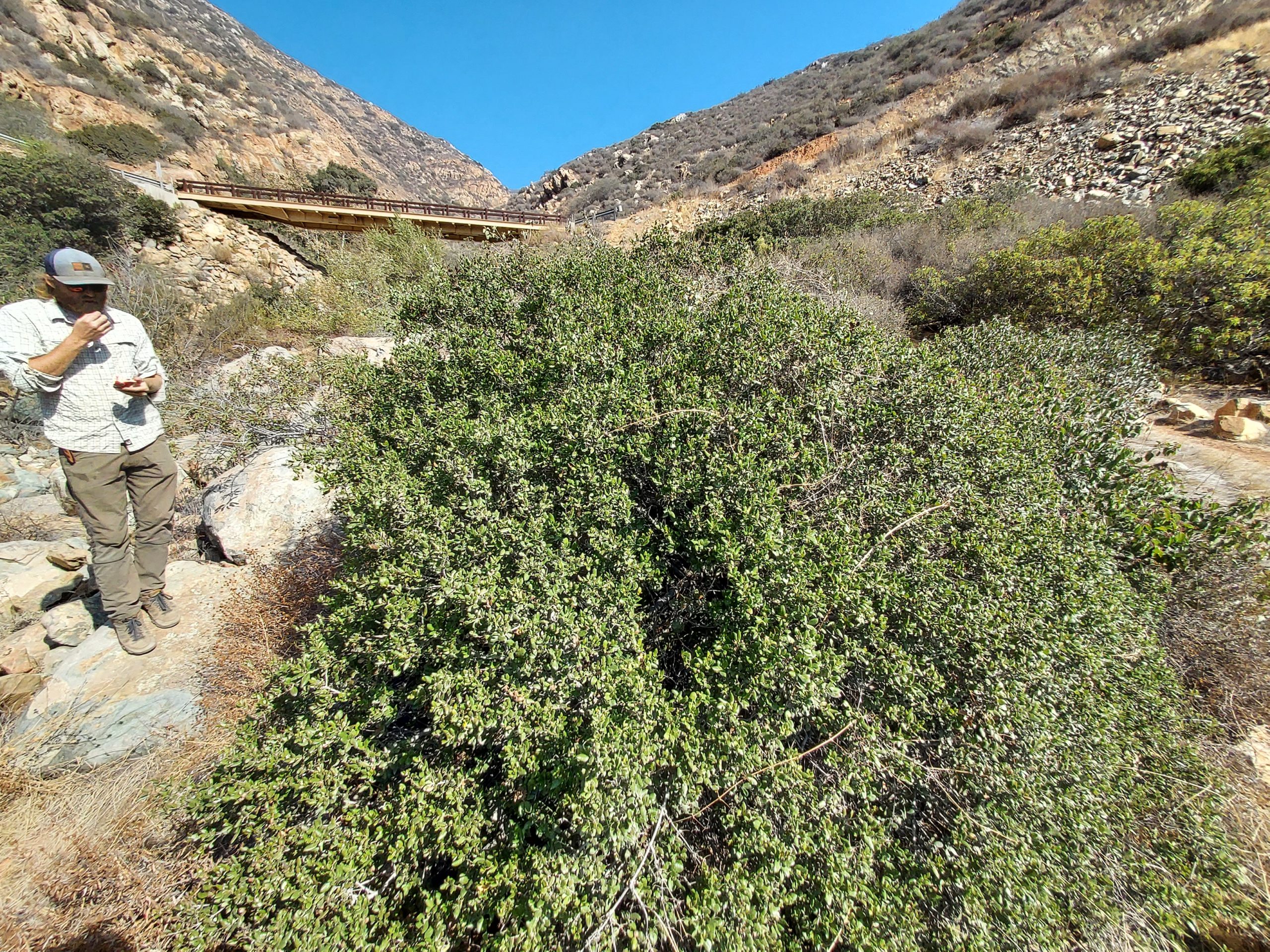
Southern Maritime Chaparral grows along the coast from southern Orange County to Point Loma. It is associated with coastal fog and
eroded sandstone soils. Although primarily a chamise and black sage chaparral, it includes a number of rare, endemic plant species,
including several of the following species.

Click image for closeup view For full plant views click on each image below.

Image
Botanical Name
Common Name
Garden/Location
Arctostaphylos glandulosa ssp. crassifolia

Del Mar Manzanita
Overlook Natural Area,
Native Plants, Native Peoples,
California Gardenscapes
Baccharis vanessae Encinitas Baccharis
Overlook Natural Area,
Native Plants, Native Peoples,
California Gardenscapes
Ceanothus verrucosus Warty-stem Ceanothus
Overlook Natural Area,
Native Plants, Native Peoples,
California Gardenscapes
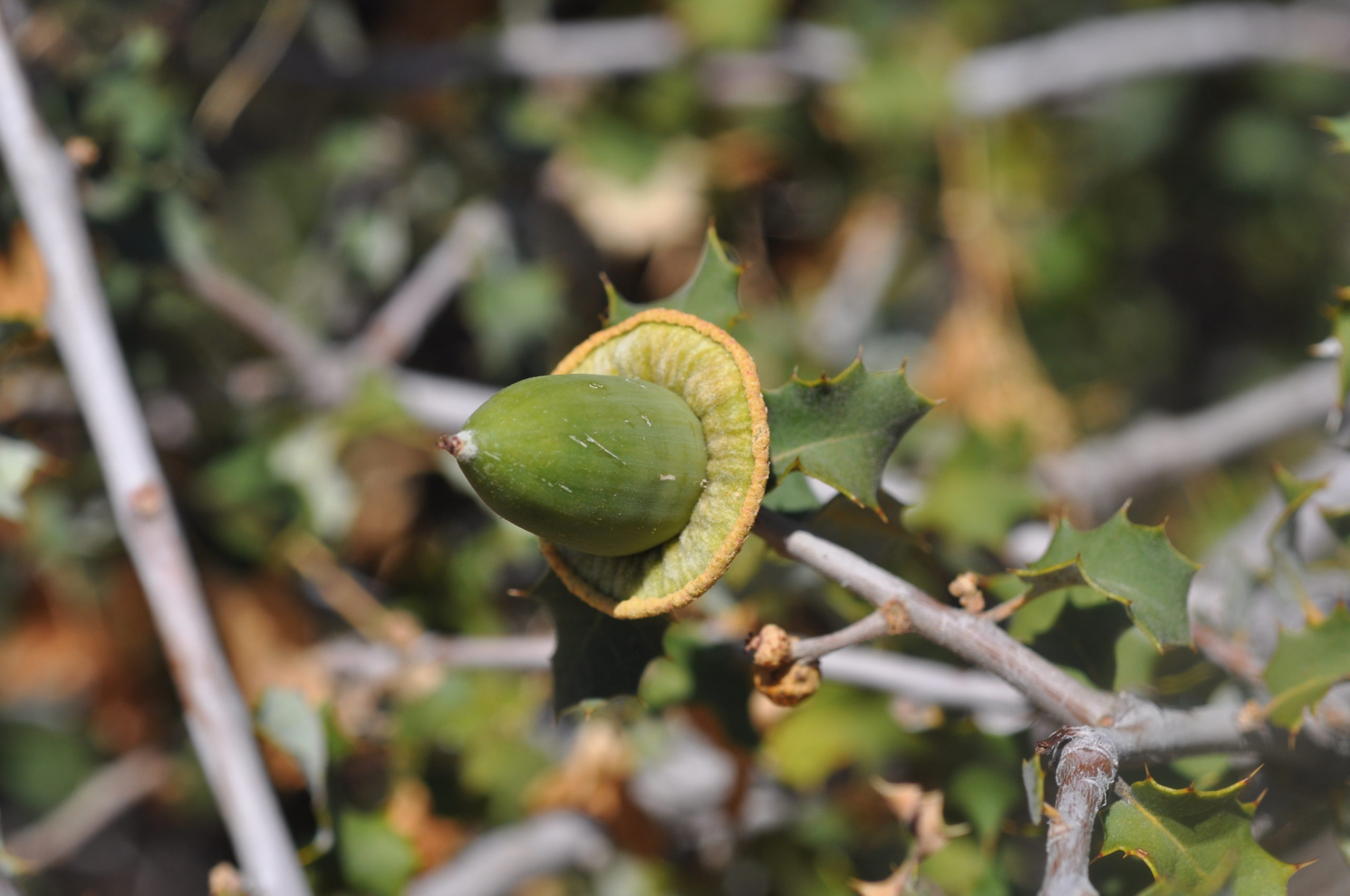
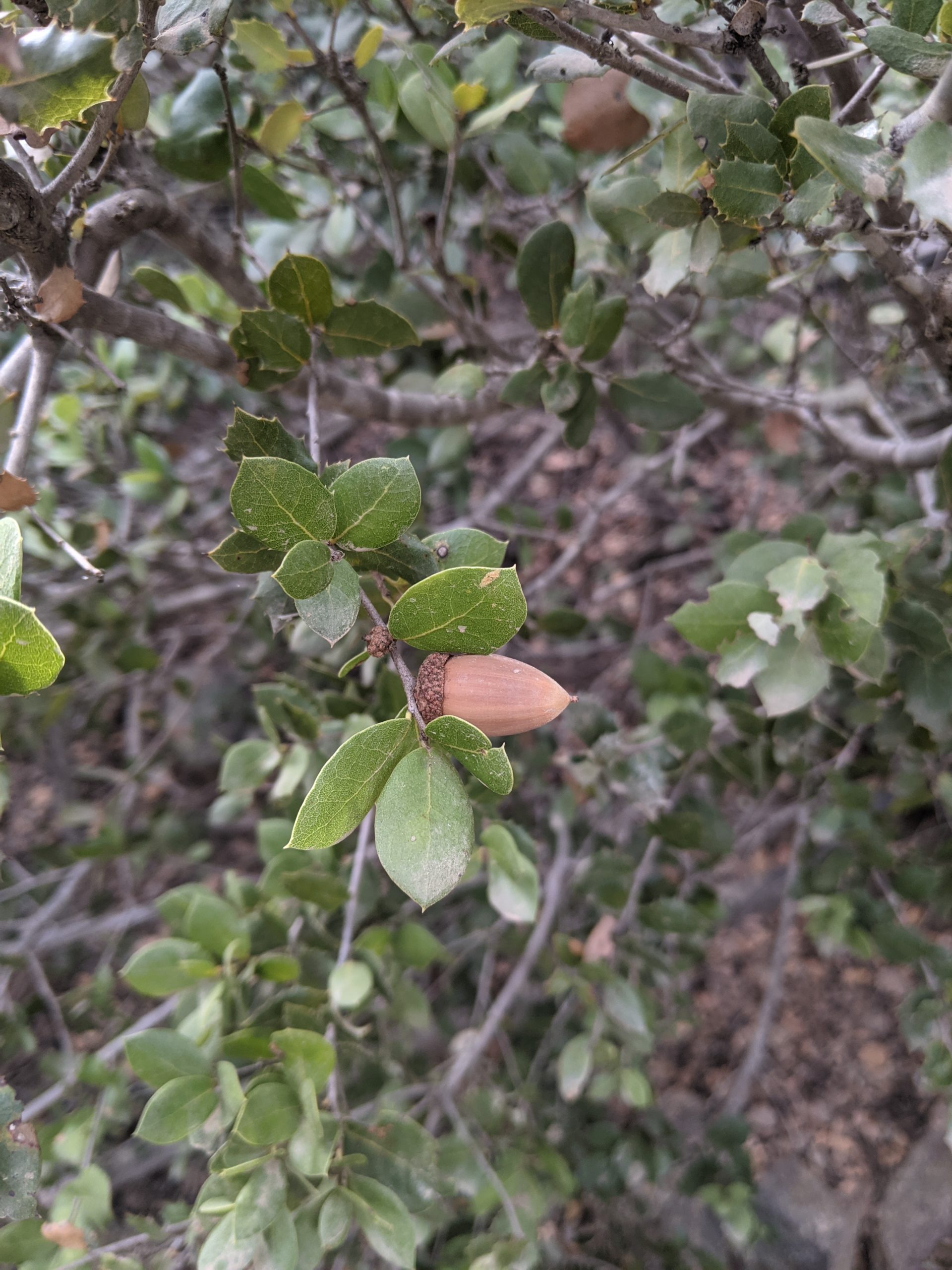
Quercus dumosa Coast Scrub Oak
Overlook Natural Area,
Native Plants, Native Peoples,
California Gardenscapes
Cneoridium dumosum Bush Rue

Overlook Natural Area,
Native Plants, Native Peoples,
California Gardenscapes
Eriodictyon crassifolium var. crassifolium
Thick-leaf Yerba Santa

Overlook Natural Area,
Native Plants, Native Peoples,
California Gardenscapes
Opuntia littoralis
Prickley Pear Cactus

Overlook Natural Area,
Native Plants, Native Peoples,
California Gardenscapes

Endangered Species

Endangered Species

Del Mar Manzanita (Arctostaphylos glandulosa ssp. crassifolia)

Del Mar Manzanita (Arctostaphylos glandulosa ssp. crassifolia) is a federally endangered subspecies that grows along the coast from Encinitas, California south into Baja California in maritime chaparral. They are found on sandstone terraces within five to ten miles
of the coast.
Today they often survive on sandstone topography that is too rugged and steep for easy development. This manzanita is adapted
to wildfires, regrowing from large basal burls.

Del Mar Manzanita grows in the natural area to the east of the Overlook boardwalk and along the trail on the east side of Native Plant, Native People.

Del Mar Manzanita
Photos: Sally Sandler


Nevin's Barberry or Mahonia Berberis nevinii (syn. Mahonia nevinii)

Nevin's Barberry (Berberis nevinii) is a federally endangered species native to isolated riparian sites in Los Angeles, Riverside, and San Bernadino Counties with only a couple of reported sites in San Diego County. This large dense evergreen shrub grows up to 10’ high x 10’ wide and is quite attractive with small prickly, grey compound leaves. Small yellow flowers bloom in late winter to early spring and are followed by small clusters of red fruits in summer. Nursery propagated plants are occasionally available, especially from native plant nurseries.

Large specimens of Nevin’s barberry grow in California Gardenscape, Fire Safety Garden and the Herb Garden.

Del Mar ManzanitaPhotos: Herb Knufken and Rachel Cobb


Orcutt’s Hazardia or Goldenbush (Hazardia orcuttii)

Orcutt’s hazardia or goldenbush (Hazardia orcuttii) is a subshrub in the Asteraceae or daisy family. The only wild population in the U.S.A. grows on a small hilltop only two miles from the Botanic Garden. There are only a few populations in northern Baja California. This is listed as a state of California threatened species.

The plants generally grow up to three feet tall. They have small evergreen leaves. In late summer they produce small yellow blooms. In a reintroduction project by the California Fish and Game Commission several hundred plants were propagated and planted in a reintroduction effort in several local sites. In 1995 thirty plants in five-gallon nursery containers were planted in the Garden in cooperation with the state and the Center for Natural Lands Management. They were planted in a plot of clay loam soil that had originally come from the same area where the naturally occurring population is found. Most of the plants survived and have since produced several seedlings. The area where these plants grow is within one of the Garden’s natural areas. They can be seen along the west side of the Native Peoples, Native Plants trail.

The San Diego Botanic Garden has conservation-related interpretive signs about these species and their plant communities. We provide conservation information about them as well as other non-native species of conservation concern in educational classes, tours, docent programs, and on our website.

Orcutt’s Hazardia
Photos: Rachel Cobb


Otay Mesa Rose (Rosa minutifolia)

This short, thorny rose has attractive, fragrant pink blooms from January to June. It has tiny compound leaves. Only two plants of Otay Mesa rose (Rosa minutifolia) remain in the wild in the U.S.A. where they grow on the U.S.-Mexico border. The species ranges further south into northern Baja California.

At SDBG this can be seen at the Fire Safety Display by the parking lot and on the west side of California Gardenscape.

Orcutt’s HazardiaPhotos: Rachel Cobb


Shaw's Agave (Agave shawii)

Shaw’s agave is a small to medium-sized agave with attractive green leaves and reddish brown spines. It forms large clumps over time. After a number of years large, spectacular flower spikes bloom, after which the individual plant dies. Shaw’s agave once grew along coastal San Diego, but in the wild only one plant remains along the U.S.-Mexico border. Further south this agave grows along the Pacific coast of northern Baja.

At SDBG Shaw’s agave can be seen in the New World Desert Garden and California Gardenscape.

Orcutt’s HazardiaPhotos: Rachel Cobb


Banner Photo:Del Mar Manzanita | Rachel Cobb

  image

San Diego Botanic Garden

What's in Bloom March Bloom April Bloom May Bloom June Bloom July Bloom August Bloom September Bloom October Bloom November Bloom December Bloom

March Bloom April Bloom May Bloom June Bloom July Bloom August Bloom September Bloom October Bloom November Bloom December Bloom

image